Chapter Eight: The Narcissist and The Empath, A Tale of Emotional Evasion

“All that glisters is not gold,”
William Shakespeare
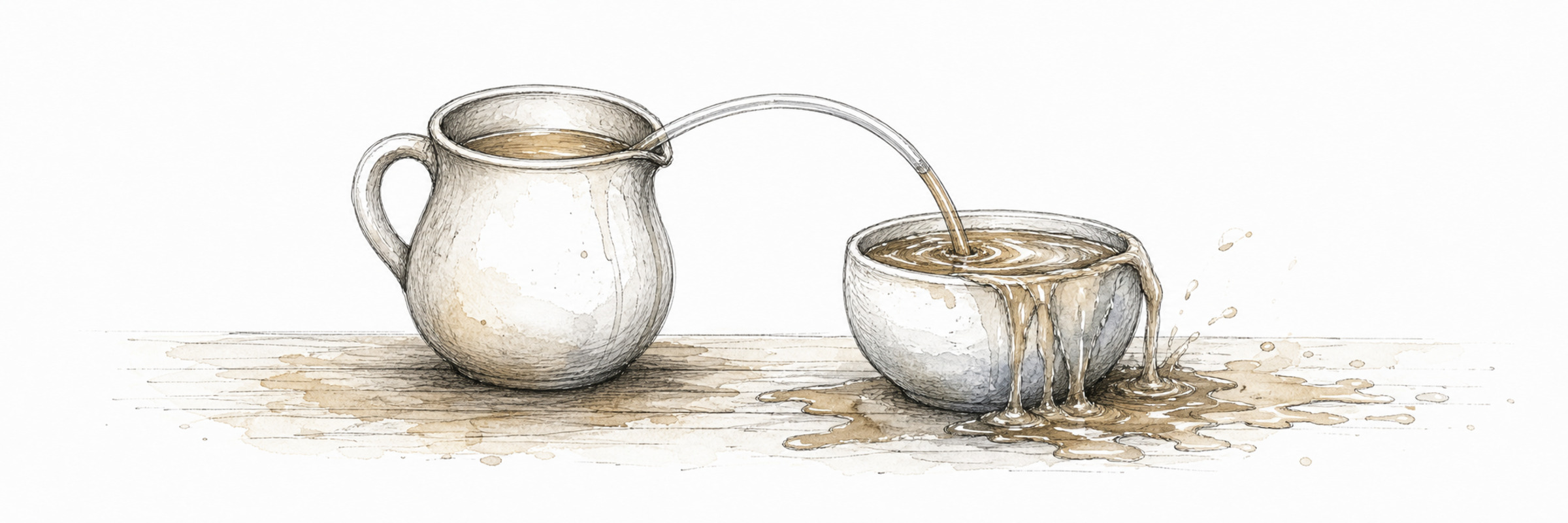
Playwright William Shakespeare warned against mistaking a promising appearance for real value. What looks valuable from the outside may not be what it promises. This chapter tells a personal story. It is not a clinical case report. It is the story of E, a deeply empathetic person, and N, someone whose charm pulled him in long before he understood the cost of staying close. What follows is about confusion, self-doubt, and the painful clarity that can come after a relationship built more on control than care.
The Appeal
At first, N seemed magnetic. N was attractive, engaging, quick with words, and skilled at making contradiction sound profound. One day N would ask, “Do you think I’m pretty?” The next day N would shrug and say, “I don’t care what people think.” E saw depth in those contradictions. Later he would see instability, insecurity, and a powerful need for validation.
Life around N felt like a stage, and N expected lead billing. Attention mattered. Image mattered. Winning mattered. Relationships often seemed less like places of mutual care and more like places where people were sorted into categories: useful, flattering, threatening, disposable.
E did not understand all of that at first. He mostly felt the pull. Many empathetic people do. They see pain beneath harsh behavior and hope love, patience, or understanding might help bring out something gentler.
The Crack in the Mask
The relationship changed sharply after one embarrassing incident in front of N’s friends. What might have been a repairable moment in a healthier relationship became a major narcissistic injury in E’s eyes. N’s reaction was far larger than the moment called for. The anger felt less connected to what happened and more connected to shame, public image, and the need to regain control.
E also watched N move quickly to shape the story for others. Friends were given a one-sided version. N became the victim. E became the problem. That kind of narrative control can isolate the other person while protecting the image the controlling partner most wants to keep intact.
By then E had already noticed red flags. N could become cold when challenged, dismissive when confronted, and strangely energized by emotional advantage. Criticism landed hard. Contempt appeared quickly. The relationship began to feel less like mutual love and more like emotional weather that changed without warning.
The Discard
After the incident, N appeared to wrestle with what had happened. E could not tell whether the struggle was real or whether it was mainly a performance used to justify a decision already made. In the end, N discarded him. The ending was abrupt. For E, the abruptness hurt almost as much as the contempt.
The discard also clarified something. E began to see that many of N’s criticisms had said more about N’s shame and insecurity than about E’s worth. He began to recognize a pattern of admiration-seeking, low empathy, transactional relating, and control. That recognition did not erase the grief, but it did start to break the spell.
The Search for Clarity
E tried to move on in practical ways first. He deleted videos, images, memes, and other digital remnants of the relationship. He hoped that if the reminders were gone, the pain might loosen too. The cleanup helped a little, but it did not bring closure.
He reached out anyway. He tried to communicate. Silence came back. He even wrote a brief handwritten letter because part of him still hoped the behavior was rooted in trauma, confusion, or some painful story that could still be reached with honesty. The letter was not an attack. It was an attempt to make sense of something that no longer made sense.
Eventually E went to therapy. That mattered. Therapy helped him see how grief after the death of his life partner had left him emotionally vulnerable and more likely to ignore early warning signs. Through that work he also learned that he had high-functioning Autism Spectrum Disorder. That discovery did not explain away the relationship, but it gave him a clearer view of his own communication style, blind spots, needs, and patterns.
Even then, E still leaned toward mercy. He noticed that N seemed to reread his emails repeatedly even while refusing to answer them. He wondered whether the silence meant curiosity, guilt, confusion, or simply control. Later N offered to meet with E and his therapist “to clear the air.” E was willing to try, even against the therapist’s advice, because he still wanted to believe the whole thing might somehow be salvageable.
The Final Clarity
The final clarity came in a sudden encounter at a concert. E’s body reacted before his mind did. Stress surged. Even so, he tried to speak to N. The reply was a cold, dismissive “No.” N walked away, leaving E with the final answer he had been trying not to see.
That moment hurt, but it also ended the fantasy. E no longer had to keep interpreting mixed signals as hope. He no longer had to keep translating contempt into hidden pain and calling that love.
In the aftermath he blocked N on social media for a time. That step was not petty. It was protective. Distance gave his nervous system room to settle and gave his thoughts room to stop circling the same unanswered questions.
What E Learned
The deepest lesson was not only about N. It was about E. He learned that empathy without boundaries can become a trap. He learned that seeing pain in another person does not obligate you to stay where you are being diminished. He learned that confusion can feel like chemistry when someone is alternating charm, shame, silence, and control.
Most of all, he learned that his empathy was not his weakness. His empathy made him loving, perceptive, and capable of real care. What needed strengthening was not his heart but his boundaries, his discernment, and his willingness to believe what harmful behavior was already showing him.
What E Took with Him
E came out of the relationship with more sorrow, more clarity, and more self-knowledge. He saw how easy it is for love, grief, hope, and self-doubt to become tangled together. He also saw that a person can lose themselves slowly while still believing they are fighting for something beautiful.
That recognition is painful, but it is also freeing. When illusion breaks, truth finally has room to work. E did not heal by becoming colder. He healed by learning how to value his own heart enough to stop handing it to someone who only knew how to use it.