Chapter Two: The Power of Building Skillsets and Helping Others, Reinforcing Your Worth, and Making a Positive Impact
“In the middle of difficulty lies opportunity.”
Albert Einstein
Theoretical physicist Albert Einstein’s epigraph turns our attention toward the possibilities inside a difficult situation. Hard seasons often force us to decide what we are going to do with pain. We can let it flatten us, or we can use part of that pressure to grow. One of the healthiest ways to do that is to build real skills and then use those skills to help somebody else.
Skill Building Rebuilds Confidence
When life hits hard, self-worth often takes a hit with it. People start doubting themselves. They hear criticism more loudly. They forget what they can do.
Learning and practicing a skill pushes back against that fog. It gives the mind evidence. Albert Bandura’s work on self-efficacy helps explain why this matters [411]. Confidence grows when people repeatedly see themselves learn, practice, and handle something that once felt hard.
Steady practice does not mean every new hobby changes a life overnight. It means steady effort changes the way you see yourself. If you keep showing up, you stop feeling powerless quite so easily.
Skill Is More Than Information
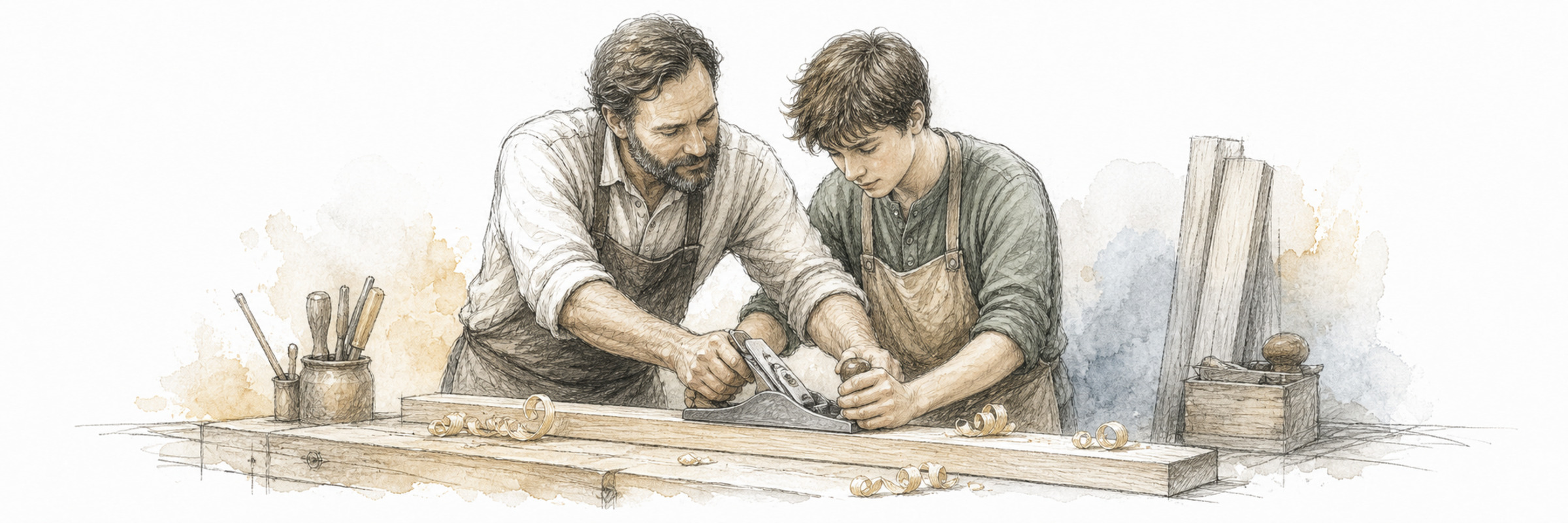
A skill is more than something you understand in theory. It is something you can actually do. That difference matters. Reading about swimming is not the same as getting in the water.
The same is true in daily life. Communication, budgeting, fixing things, writing, cooking, coding, teaching, organizing, listening, and problem-solving all become part of your lived identity when you practice them. That practice creates a sense of mastery, and mastery often quiets the voice that says you are not capable.
Motivation Lasts Longer When It Is Real
Self-Determination Theory, developed by psychologists Edward Deci and Richard Ryan, helps explain why growth lasts longer when it connects to something deeper than applause [218,495,603]. People tend to stay engaged when their effort lines up with real values, real curiosity, and real meaning.
If skill building is only about proving something to other people, the fuel runs out quickly. If it is tied to who you want to become and how you want to live, it becomes much more stable.
Motives matter because they shape whether growth becomes steady or fragile. Healthy growth sounds more like, “I want to become stronger, steadier, and more useful.” Unhealthy growth sounds more like, “I need people to admire me so I can feel real.”
Helping Others Strengthens Worth Too
Your skills are not only for private gain. They can become tools that relieve pressure in somebody else’s life. The value of that contribution matters more than many people realize.
Stephen Post’s work on altruism points to something people have sensed for a long time. Helping others often lifts well-being too [213]. Not because service makes life easy, but because it reminds us that we are able to contribute.
There is something stabilizing about being useful. A person who can repair a neighbor’s fence, explain a hard idea, babysit for a tired parent, share job advice, or cook for someone in grief is not powerless. They are participating in the repair of the world around them.
Helping Others Also Teaches You
Service is not only generous. It is educational.
When you use your skills for someone else, you run into real people, real constraints, and real consequences. That usually teaches more than practicing in isolation. It also pulls people out of the trap of endless self-focus.
Pain has a way of shrinking vision. It makes life feel like a locked room. Helping someone else can open a window. It does not erase your struggles, but it reminds you that your life can still move outward.
Do Not Build a Better Ego
There is a trap here too. Skill building and helping can both become performances. People can chase competence to feel superior. They can “help” in ways that are really about control, praise, or identity.
That kind of growth looks impressive for a while, but it does not hold up well. It becomes fragile because it depends on being seen a certain way.
Real growth is quieter. It makes you more capable, more grounded, and more available to others. It does not need constant applause to keep going.
Taking Back Your Power
When other people project bitterness, cruelty, or contempt onto you, one of the best responses is to build a life that keeps growing anyway. Refusing surrender does not mean ignoring pain. It means refusing to hand your future over to someone else’s damage.
Learning, practicing, contributing, and serving do more than fill time. They build structure inside a person. They create proof that your life has weight and direction.
Happiness researcher Sonja Lyubomirsky and her colleagues argue that sustainable change often comes from intentional habits rather than waiting for life to feel better first [212]. That applies here. Purpose often grows through repeated action. It does not always arrive before the action starts.
Usefulness Fights Despair
Hard times can tempt people to shrink, isolate, and believe the worst about themselves. Building skills pushes in the opposite direction. It reminds you that you can still learn, adapt, and become more capable.
Helping others with those skills deepens that lesson. It turns private growth into shared good. It gives pain somewhere better to go.
You do not need to master everything. You do not need to become impressive in every room. You only need to keep growing in honest ways that align with your values and make life better for somebody, including yourself.
That kind of growth builds self-respect. That kind of usefulness fights despair. And that kind of steady contribution can become one of the strongest answers to negativity that life offers.