Chapter Four: Finding Balance, Giving and Receiving in Relationships
“I’ve learned that people will forget what you said, people will forget what you did, but people will never forget how you made them feel.”
Maya Angelou
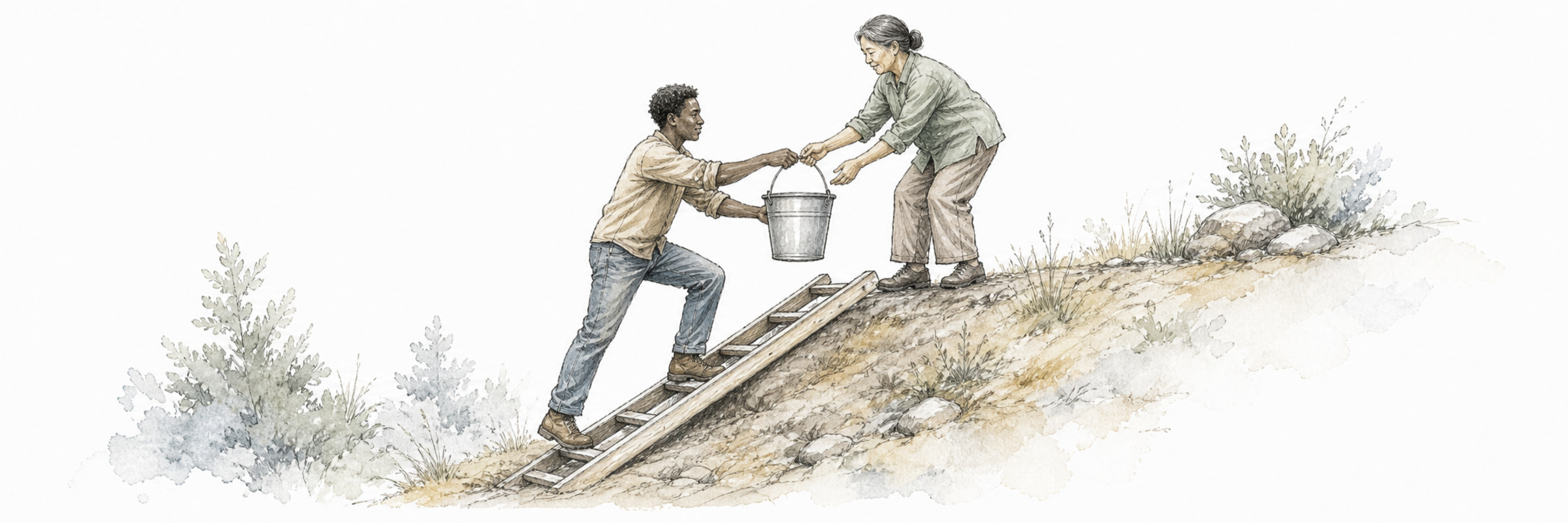
Poet and civil rights activist Maya Angelou directs our attention to what people remember about being with us. People may forget details. They rarely forget the pattern of how being with someone made them feel. That lasting impression is part of why balance matters so much. When one person is always pouring out and the other is mostly receiving, the relationship starts to bend under the strain.
The Varying Degrees of Generosity
People do not all give in the same way or from the same reserve. Emotional strain, financial stress, health problems, immaturity, fear, and plain selfishness can all affect what someone is willing or able to offer. That difference does not excuse a lack of reciprocity, but it does help explain why giving and receiving rarely stay perfectly equal. The point is not to demand identical contributions. The point is to notice whether there is real mutual care.
The Psychology of Giving and its Limits
Generosity is often linked with greater happiness and life satisfaction [210]. Giving can connect us to other people and give life a sense of meaning. But over-giving can become draining. People who keep extending themselves without limits often run straight into burnout, fatigue, resentment, and emotional depletion [214,216]. That cost is why balance matters.
Positive Aspects of Generosity
Generosity has real psychological benefits. Dunn, Aknin, and Norton found that spending money on others can raise happiness [210]. Lyubomirsky and colleagues, along with Post, point in a similar direction: acts of care can deepen connection, meaning, and well-being [212,213]. Giving can enlarge life when it flows from genuine care rather than compulsion.
The Limits of Giving: A Delicate Balance
The trouble starts when generosity loses its boundaries. Adam Grant’s work and Michael Poulin’s research both help illustrate the same truth: giving is good, but giving without limits can become costly [214,215]. Some people over-give because they need to feel needed. Some do it because they are afraid of conflict. Some were taught that love means endless self-sacrifice. Whatever the cause, overextension often leads to exhaustion instead of closeness [216].
Strategies to Maintain Balance
Healthy generosity has edges. Recognizing your limits and setting boundaries are part of love, not a betrayal of it [217]. Self-awareness and honest communication help people give from strength rather than from silent depletion [218]. If giving keeps leaving you bitter, empty, or unseen, something in the pattern needs attention.
Expressing Love: Individualistic and Unique
People also differ in how they show care. Some offer words. Some show up through touch, gifts, help, or time. Gary Chapman’s love-language framework is useful here, not because it explains everything, but because it reminds us that affection is often expressed in different forms [219]. If two people never talk about what care looks like to them, both can end up feeling unseen while each thinks they are trying.
Introduction to Love Languages
Chapman described five common ways people tend to express and receive love: words of affirmation, acts of service, receiving gifts, quality time, and physical touch [219]. The framework is simple, but it can help people notice patterns they would otherwise miss.
Words of Affirmation
For some people, words matter deeply. Encouragement, appreciation, and spoken tenderness land with unusual force [220].
Acts of Service
Others feel loved through help. Acts of service say, in effect, I am willing to carry some of this with you [221].
Receiving Gifts
For others, gifts are meaningful not because of price but because of thought and care [222]. The gift becomes a visible reminder that they were kept in mind.
Quality Time
Some people feel most connected through time and attention. Presence matters more to them than presentation [223].
Physical Touch
For others, touch communicates reassurance, affection, and belonging in ways words cannot [224].
Communication and Boundaries in Love Languages
None of this works well without communication. People need room to say what helps them feel cared for, what leaves them feeling neglected, and what crosses a boundary [54,225]. Love languages are not a tool for demanding perfection. They are a tool for better understanding.
Spotting the Signs: Giving Versus Taking
Early on, it can be hard to tell whether someone is generous, avoidant, self-centered, distracted, or simply moving at a different pace. Still, some patterns are worth watching. Lack of initiative, chronic self-focus, poor responsiveness, weak reciprocity, or constantly placing you beneath everything else can all point to an imbalance in the relationship [226].
The Complexity of Generosity Discernment
Generosity is not measured by one grand gesture. It is usually revealed in smaller patterns over time. That slower reality is why discernment matters.
Lack of Initiative: Passive Engagement
If one person never initiates, that can signal passive engagement or low investment [227]. It is not decisive by itself, but it does matter.
Self-Centeredness: A Focus on Self
Self-centeredness shows up when one person’s wants, moods, and needs always seem to outrank the other person’s [73]. Over time, that pattern corrodes mutuality.
Unresponsiveness: Failure to Acknowledge Needs
If someone regularly ignores needs, feelings, or bids for connection, that may signal a lack of emotional attunement [225].
Lack of Reciprocity: One-Sided Relationships
Reciprocity matters because healthy relationships are not built on one-way flow [228]. Without reciprocity, resentment usually follows.
Prioritizing Other Relationships: Shifting Attention
If someone consistently keeps you at the edge of their life while expecting access to the center of yours, pay attention [229].
Evaluating Verbal and Non-Verbal Cues
Words matter, but so do tone, timing, body language, effort, and follow-through [230]. People often reveal their priorities before they ever explain them.
The Role of Cultural and Individual Differences
Culture, temperament, and experience all shape how people give and receive [231]. That complexity is real. It should make us patient, not blind.
The Art of Discernment
The real question is not whether a person gives exactly as you do. The question is whether the relationship feels mutually caring, honest, and alive [232].
Evaluating and Reflecting: Steps Before Ending a Relationship
Before ending a relationship, it helps to slow down and reflect carefully. Open communication, empathy, clear boundaries, honest evaluation, and wise counsel can all bring clarity [233]. The decision is still yours. But it should be made with as much truth as you can bear to face.
The Gravity of Relationship Termination
Ending a relationship has weight. That weight is why it deserves care rather than impulse [233]. Some good questions to ask are simple:
Open Communication: Laying the Groundwork
Considering the Other Person’s Perspective: Embracing Empathy
Setting Personal Boundaries: Defining Limits
- Do I know what is non-negotiable for me, and have I stated it clearly [237]?
Evaluating the Relationship Holistically: Seeing the Whole Picture
Seeking Advice: Consulting Trusted Sources
Integrating Personal Experience and Emotions
A thoughtful ending does not guarantee an easy one. It does help you leave with more integrity and less confusion.
Protect the Real Ones
Not everyone will give the way you give. Some people love generously. Some love cautiously. Some are simply too self-involved to love well at all. The work is learning the difference without becoming bitter.
Healthy relationships are not built on endless giving from one side and endless receiving from the other. They grow where there is mutual care, honest communication, respect for limits, and enough discernment to tell the difference between a hard season and a one-sided bond. When you find someone who gives with real heart and receives yours with care, protect that connection. It is worth more than grand words.