Chapter Nine: Crabs in a Bucket, Recognizing and Addressing Damaging Behavior in Relationships
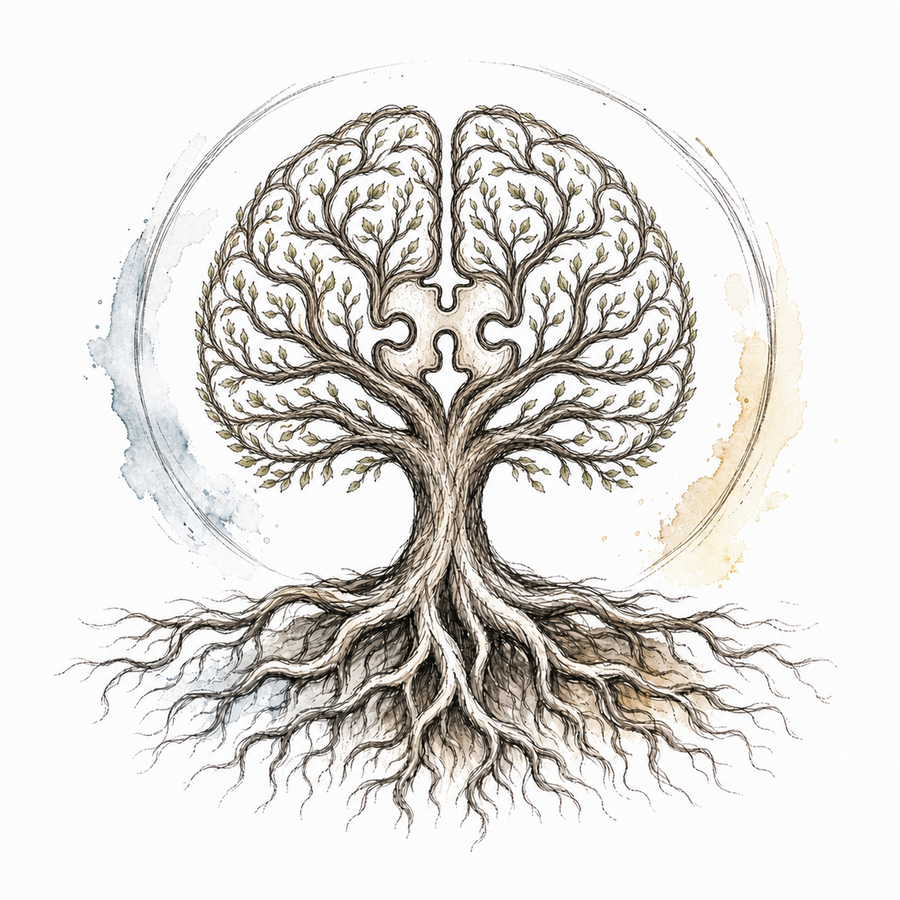
“Don’t let the behavior of others destroy your inner peace.”
Dalai Lama
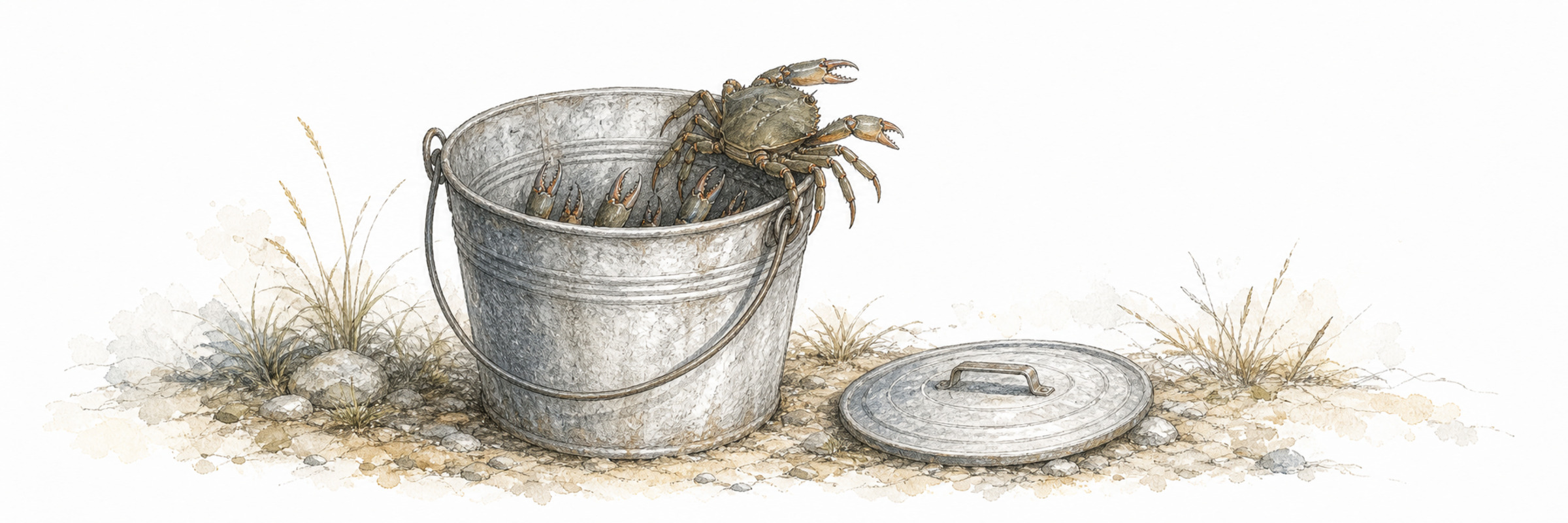
The image of “crabs in a bucket” is useful because it is easy to see. When one crab tries to escape a bucket, the others pull it back down. People can do something similar. When one person starts growing, healing, succeeding, or simply becoming happy, someone else may try to drag them back down. This pattern can happen inside a relationship, and it can also happen around a relationship.
Sometimes the sabotage is obvious. Sometimes it comes dressed up as concern, advice, or tough love. Either way, the effect is the same. It makes growth harder and peace more fragile.
What Drives This Behavior
Jealousy, insecurity, and resentment do not usually come out of nowhere. They often grow out of deeper pain, comparison, fear, or an unstable sense of self [271]. Social pressure can make that worse. The old urge to “keep up with the Joneses” can leave people feeling small, left behind, or ashamed, and some people respond to those feelings by trying to undermine someone else [271].
The “Misery Loves Company” Phenomenon
The same pattern does not only happen between romantic partners. Friends can do it too. So can family members. The old saying “misery loves company” survives for a reason. When people are unhappy, they may feel a pull to make their unhappiness feel normal, shared, or justified [272]. Seeing you happy in a relationship can stir up their own insecurity, loneliness, or envy, and instead of facing those feelings honestly, they may try to pull you back into the same emotional bucket they are living in.
One of the more confusing versions of this happens when someone pushes you to leave your partner in the name of “independence.” On the surface, that can sound empowering. In practice, it can become a new form of dependence. You may leave a relationship only to find yourself more emotionally tied to the very people who pushed you to do it.
Relational psychology helps explain why this can happen. Diane Felmlee’s work on power in romantic relationships points to the way influence and control can shift relational balance [273]. If someone is pressuring you to cut off a partner while making themselves your main emotional anchor, that is worth taking seriously. The risk is even greater when jealousy, hidden motives, or emotional neediness are sitting underneath the advice.
That outside pressure can also become a form of emotional triangulation. By casting themselves as the “wise one,” the “protector,” or the “only person who really gets it,” they place themselves between you and your partner and gain quiet power over your choices [274].
Real independence is not about obeying the loudest outside voice. It is about seeing clearly and deciding honestly. Clear thinking means weighing the full picture, including what is happening inside the relationship and what may be happening around it.
What This Does to a Relationship
When one person is repeatedly undermined, the damage goes beyond hurt feelings. Trust starts to weaken. Respect starts to thin out. And once those two begin to erode, the relationship becomes less steady and less safe [173].
Trust is not only about fidelity. It is also about believing the other person wants good for you. When that belief breaks, the whole relationship becomes less stable [173].
Emotional Disengagement and Reduced Intimacy
Over time, people often protect themselves by pulling back. Emotional distance can feel safer in the moment, but it comes at a cost. Intimacy begins to shrink. Not only physical closeness, but emotional openness, tenderness, and the willingness to be fully known start to fade [275].
How the Damage Builds
The breakdown is often gradual. Affection gets withheld. Conversation gets thinner. People stop sharing what is really happening inside them. Sometimes they begin avoiding each other altogether. What started as sabotage ends as distance.
The Role of Outside Influence
Outside voices can make the damage worse. Friends, relatives, or acquaintances who keep planting suspicion can deepen old fractures or create new ones. Once doubt gets fed from both the inside and the outside, it becomes much harder for a couple to think clearly together [276].
Why People Whisper
The motives behind that whispering can be messy. Sometimes it is plain jealousy. Sometimes it is competition. Sometimes it is unhappiness looking for company. And sometimes the person whispering has feelings, needs, or ambitions that make your relationship inconvenient to them [272].
Where It Can Lead
When sabotage, mistrust, and emotional withdrawal all pile up together, relationships can break under the weight. That warning does not mean every struggling couple is doomed. But it does mean this pattern should be taken seriously early, before the damage hardens into something much harder to repair [276].
How to Recognize the Signs
Inside the Relationship
Belittling Achievements
If your partner keeps minimizing your accomplishments, that is not a small issue. It is a warning sign. Repeated belittling can slowly damage confidence and self-respect until you start doubting your own abilities [277].
Sowing Seeds of Doubt
Another warning sign is persistent doubt-casting. If your partner keeps making you question your choices, your judgment, your memory, or your perception, you may be dealing with gaslighting or another manipulative pattern that destabilizes your sense of reality [149].
Outside the Relationship
The Whisper Campaign
Sometimes the “crab” is not your partner at all. It is the friend, sibling, parent, or acquaintance who keeps feeding you negativity about the relationship. The comments may sound subtle or dramatic, but the effect is the same. They make trust harder and suspicion easier [276].
Discerning Intentions
It is worth asking a simple question. Is this person trying to help me see clearly, or are they trying to steer me? Concern can be honest. It can also be possessive, jealous, competitive, or self-serving [272]. You do not need to assume the worst, but you do need to pay attention.
Strategies for Overcoming “Crabs in a Bucket” Behavior
Open and Honest Communication
If the sabotage is happening inside the relationship, bring it into the open. Name the pattern clearly. Talk about what you are seeing, how it affects you, and what has to change. Honest communication does not solve everything, but without it, almost nothing gets solved well [234].
Active Listening Matters
Speaking honestly matters. Listening honestly matters too. Active listening means more than waiting for your turn. It means trying to understand what the other person is actually saying and what they may be feeling underneath it [234].
Set Boundaries Around Outside Sabotage
If the problem is coming from outside, boundaries become essential. Boundary-setting may mean telling someone plainly that their comments are harming the relationship. It may mean refusing certain conversations. In some cases, it may mean stepping back from the person altogether. Boundaries are not cruelty. They are one way healthy relationships protect themselves [278].
Build the Opposite Pattern on Purpose
Celebrating Successes
One of the best antidotes to relational sabotage is mutual celebration. When something good happens for your partner, let yourself be glad with them. Mutual celebration builds goodwill, safety, and respect [227].
Emotional Support During Challenging Times
Support during hard times matters just as much. When couples learn to stand with each other instead of competing with each other, the whole emotional climate changes [227].
Subtle Sabotage from People Close to You
One of the hardest parts of this pattern is that it often comes from people you trust. That trusted position is what makes it hard to name. Manipulation does not always sound manipulative. Sometimes it sounds caring, wise, protective, or helpful [98].
Red Flags to Watch For
Unsolicited Negative Opinions
If someone keeps bringing you criticism about your partner that you did not ask for, pay attention. One comment may mean nothing. A repeated pattern usually means something [279].
The “Just Between Us” Conversations
Another warning sign is the secretive “just between us” conversation. If someone keeps asking you to hold negative stories, gossip, or suspicions about your partner in private, they may be helping create a divide that weakens the relationship [279].
The Illusion of Independence
As noted earlier, some people may pressure you to end a relationship while calling it freedom. Felmlee’s work on relational power helps explain why that can be misleading [273]. Sometimes what gets sold as independence is really a transfer of dependence from one relationship to another.
Evaluating Motives
Ask yourself what this person seems to gain from steering your relationship. Maybe the answer is harmless. Maybe it is not. Jealousy, competition, loneliness, or unhappiness can all distort advice [272].
The Importance of Trusting Your Instincts
Your intuition is a powerful tool. If something feels off, do not dismiss that feeling too quickly. Joseph Burgo’s work on narcissistic manipulation is a useful reminder that manipulation often thrives in confusion and self-doubt [98]. Bringing the pattern into the light is often the first step toward dealing with it.
Out of the Bucket
The lesson here is simple. Pay attention to who helps you grow and who keeps trying to pull you back down. That question matters both inside a relationship and outside it.
Healthy love does not punish growth. Healthy love does not feed on insecurity. Healthy love does not need you smaller in order to feel safe.
The better pattern is the opposite of the bucket. It is two people helping each other climb. And when outside voices keep reaching in to pull one of you down, wisdom sometimes means putting a lid on the bucket and walking away from the noise.