Chapter Eleven: Sharpening the Mind, Learning to Think Critically

“Critical thinking is the intellectually disciplined process of actively and skillfully conceptualizing, applying, analyzing, synthesizing, and/or evaluating information gathered from, or generated by, observation, experience, reflection, reasoning, or communication, as a guide to belief and action.”
The Foundation for Critical Thinking
The Foundation for Critical Thinking gives a dense definition, but the core idea is simple and worth keeping. Critical thinking shapes how we interpret the world, make decisions, and respond to other people. It is one of the most useful habits a person can build because it helps us slow down, look closer, and ask whether what we believe is actually true.
The Essence of Critical Thinking
Critical thinking sits near the center of intellectual life [484]. It is more than collecting facts. It is about examining claims carefully, testing our assumptions, and learning how to separate evidence from impulse [485].
Paul and Elder describe critical thinking as a disciplined way of analyzing and evaluating information so it can guide belief and action [485]. Brookfield makes a similar point when he argues that good thinking requires us to question the assumptions we normally leave untouched [484]. That kind of thinking is active. It does not simply absorb information. It asks where an idea came from, what supports it, what weakens it, and what might have been left out [486,488].
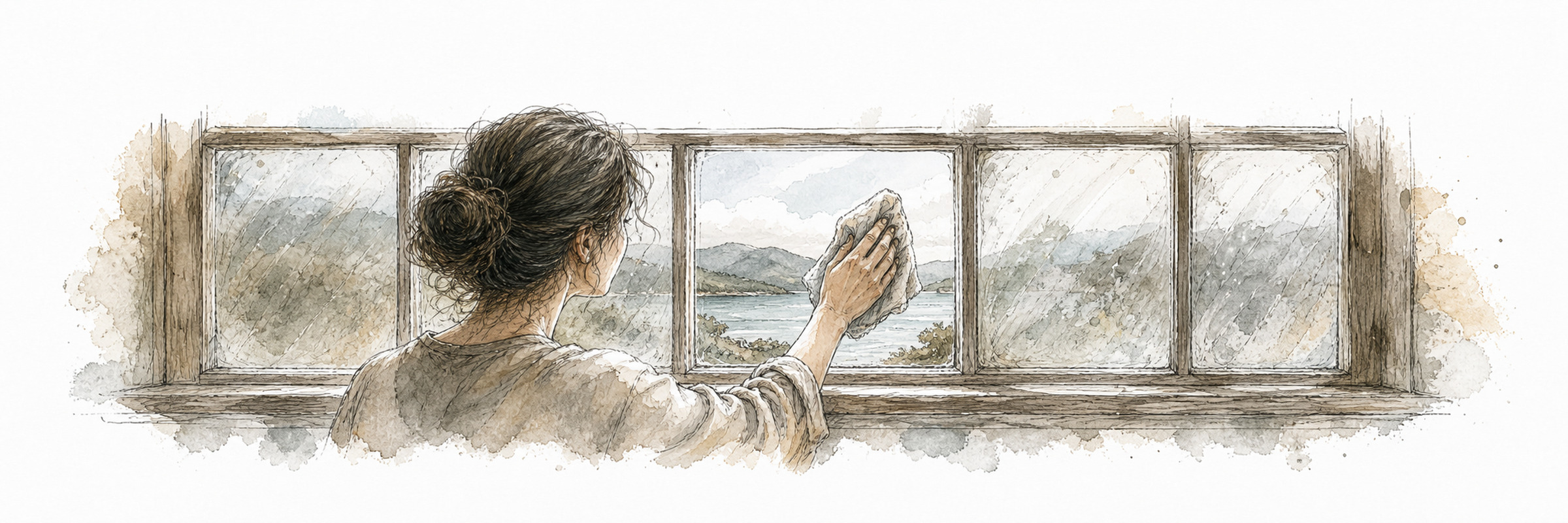
A simple way to think about critical thinking is to picture cleaning a smudged window. The world outside may not change, but the clearer the glass becomes, the more accurately we can see what is in front of us. Critical thinking helps clean the glass.
The Importance of Critical Thinking
Critical thinking matters because bad thinking has real consequences. It affects the news we trust, the leaders we follow, the medical claims we believe, and the choices we make in our own lives [487,488]. In a world full of confident opinions, clickbait, half-truths, and outright misinformation, clear thinking is a form of protection [484,485].
It also helps us evaluate sources. A claim is not trustworthy just because it is popular, emotional, or repeated often. Critical thinking asks whether the source is credible, whether the reasoning makes sense, and whether the evidence actually supports the conclusion [485,489].
This skill matters far beyond school or debate. It shapes how we choose careers, vote, handle conflict, judge risk, and talk through moral questions [486,487]. Good thinking will not make life simple, but it can keep us from being careless with truth.
How to Hone Your Critical Thinking Skills
Critical thinking grows through practice. Like a muscle, it gets stronger when we use it regularly and honestly.
One part of that practice is learning to question our own conclusions. When we feel certain, it helps to ask: What am I assuming here? What evidence supports this? What evidence points another way? What would make me change my mind? [484,485]
Another part is learning to notice our biases. We all favor ideas that flatter us, protect our identity, or confirm what we already wanted to believe. Critical thinking does not require us to become emotionless. It asks us to notice when emotion is driving the wheel without our permission [488].
Critical thinking also grows through conversation. Other people can expose blind spots we would never catch on our own. Listening well, asking fair questions, and engaging disagreement without panic all strengthen the mind [489]. Good thinkers know how to argue fairly. They also know how to learn.
Self-correction is part of the process too. Mistakes are not proof that thinking carefully failed. Often they are the very thing that teaches us how to think better next time [486]. The goal is not to become flawless. The goal is to become more honest, more careful, and more teachable.
Thinking as a Way of Living
Critical thinking is more than an academic skill. It is a way of living with honesty and humility. It helps us resist easy answers, question shallow certainty, and make decisions with greater care.
The habit is not always comfortable. Sometimes it forces us to admit we were wrong. Sometimes it asks us to slow down when everyone around us wants instant certainty. Still, that discomfort is worth it. Truth usually asks more of us than pride does.
Critical thinking also helps us stay humble. The more clearly we learn to think, the more aware we become of our limits. That humility is not weakness. It is maturity.
Naturalist Charles Darwin wrote in the introduction to The Descent of Man that “ignorance more frequently begets confidence than does knowledge.” The goal is not to live in endless doubt. The goal is to stay honest enough to question ourselves, patient enough to weigh evidence, and grounded enough to follow truth where it leads.