Chapter Nine: Deciphering the Poisonous from the Misunderstood, A Guide to Accurate Perception

“There is a charm about the forbidden that makes it unspeakably desirable.”
Mark Twain
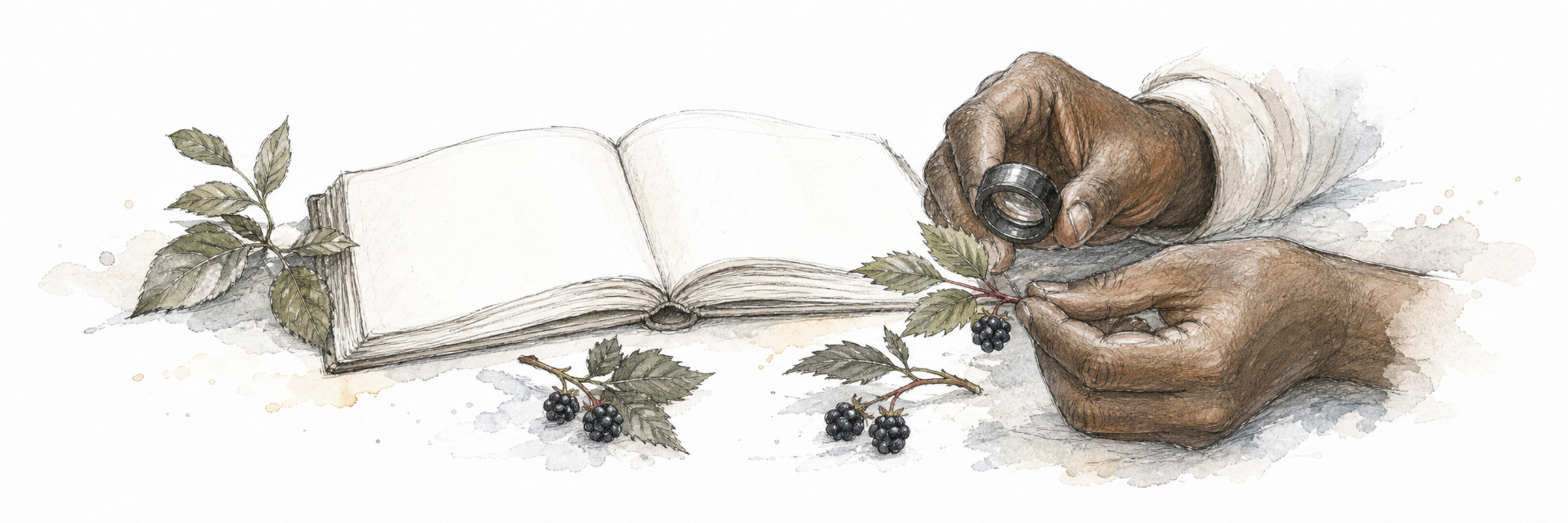
Writer and humorist Mark Twain understood that people are often drawn to dramatic labels. That warning matters here, because words like toxic and poisonous can be used too loosely. Some people really do bring manipulation, contempt, and chaos wherever they go. Other people are being judged unfairly, caught in a bad season, or viewed through gossip and projection. This chapter is about telling the difference.
Encountering the Poisonous and the Misunderstood
Most people have met someone who seems to leave the room heavier than they found it. After time with them, you may feel drained, confused, guilty, or strangely small. Still, that feeling alone is not enough to define a person. Before applying a heavy label, it helps to slow down and ask a few honest questions. Are you seeing a real pattern, a single ugly moment, or someone else’s story repeated as if it were your own? People can be hard to understand. People can also be deeply harmful. Those are not always the same thing.
Identifying the Patterns
Some people do seem to carry chaos with them. They stir conflict, twist facts, dodge responsibility, or leave damage behind so regularly that the pattern becomes hard to ignore. Psychologists study these persistent patterns because patterns tell us more than isolated incidents [128].
The key is simple. We look for consistency, not one rough week. A harsh comment, a defensive reaction, or a stressful season does not tell the whole story. A repeated pattern over time tells us much more.
Traits of a Poisonous Personality
A poisonous person often shows the same harmful features again and again: manipulation, entitlement, contempt, a lack of empathy, chronic blame-shifting, and a refusal to own the damage they cause [129]. That pattern becomes the theme, not the exception.
Everyone can be selfish, reactive, or immature at times. The real question is whether the behavior is occasional and correctable or whether it is woven into the way the person moves through life.
Beyond Snap Judgments
Snap judgments are human. Our brains are built to make quick calls about safety, trust, and threat [130]. The fast instinct can be useful. It can also be unfair. In modern life, a quick impression is often only a rough sketch, not a finished portrait.
The Power of Patterns
Patterns matter more than snapshots. A single moment is like one still frame from a long film. You may learn something from it, but you do not know the full story yet. Patterns give you the fuller movie [131].
Patience matters for that reason. You have to watch what a person does over time. How do they respond to frustration, limits, conflict, disappointment, and accountability? Those repeated responses often reveal character more reliably than charm does.
The Complexity of Human Behavior
People are complicated. Someone can be wounded and still harmful. Someone can be charming and still dangerous. Someone can be difficult without being abusive. The complexity matters, especially when personality disorders or other mental health struggles are part of the picture [132].
Complication, however, does not erase consequence. You can hold compassion for a person’s pain without pretending the damage is not real.
The Role of Empathy and Context
Context matters. Is the person lashing out because they are under crushing stress, in grief, or panicking? Or is the hurtful behavior part of a familiar pattern that keeps repeating no matter the setting? Empathy helps us ask better questions [133]. Empathy does not require blindness.
A good rule is this: try to understand the context without letting context excuse everything.
The Gray Areas: A Cautionary Note
Going slower and thinking more carefully is wise. Going so far into empathy that you stop seeing red flags is not. Some people truly are unsafe. Some patterns really do call for distance.
Understanding the Psychopathy Checklist
Dr. Robert Hare developed a Psychopathy Checklist that can give some insight into identifying truly poisonous individuals. However, remember, this checklist is not meant to be used to diagnose anyone but rather as a tool to better understand some potentially poisonous traits [134].
Dr. Hare’s Psychopathy Checklist-Revised, or PCL-R, includes traits such as a pattern of superficial charm, pathological lying, manipulative behavior, lack of remorse, emotional shallowness, lack of empathy, failure to accept responsibility, and a tendency to engage in risky behavior [134].
Observing Consistent Patterns
The next time you are tempted to brand someone as poisonous or toxic, pause. Ask whether you are seeing a pattern or a one-time failure. Ask whether gossip, bias, attraction, fear, or resentment may be shaping your judgment. Then keep watching. The question is not whether the person has ever failed. The question is whether harmful behavior is the exception or the rule.
What We Should Seek in Relationships
It also helps to turn the question around. Instead of only asking what to avoid, ask what you should welcome. Kindness. Honesty. Steadiness. Respect. Accountability. The healthiest relationships usually are not confusing to describe.
Compassion Without Rescue
Every person carries experiences, wounds, hopes, fears, and contradictions. Sometimes harmful behavior is tied to internal struggle, unresolved pain, or poor coping [135]. That reality can call for compassion. It does not make you responsible for rescuing the person.
Compassion and distance can exist together. You can wish someone healing and still decide they are not safe for your life.
The Importance of Self-Preservation
Self-preservation matters whether the other person is truly poisonous or simply going through a hard time [136]. If a relationship repeatedly leaves you depleted, confused, or unsafe, that is data worth taking seriously.
Self-preservation can mean stepping back, setting firmer boundaries, limiting access, or ending the relationship altogether. None of those choices automatically make you cold. Sometimes they are the clearest sign that you are finally taking yourself seriously.
If someone close to you is struggling but you still need space, these steps can help:
- Acknowledge your need for space. Guilt does not automatically mean your need is wrong.
- Lead with empathy when you can. Understanding their pain can shape a kinder conversation without requiring self-sacrifice.
- Speak clearly. Say what you need in direct language instead of disappearing or hinting.
- Set expectations. If contact will be reduced, say so plainly.
- Remember that space is information, not punishment. Needing distance can simply mean the relationship is affecting you more than you can carry right now.
- Encourage broader support. One person should not be forced to hold up someone else’s entire life.
- Use the time honestly. Rest, think, and notice whether the relationship feels healthier with distance.
- Look for pattern more than apology. Promises matter less than repeated behavior.
A Heart with Boundaries
Human behavior is rarely simple. That complexity is why labels should be used carefully. Look for patterns. Make room for context. Stay open to the possibility that some people are misunderstood. Stay equally open to the possibility that some people are genuinely unsafe.
Empathy matters. So does self-protection. You do not have to choose between having a heart and having boundaries. The wiser path is learning how to hold both at the same time.