Chapter Eight: Toxic Relationships and the Road Back to Trust

“Over himself, over his own body and mind, the individual is sovereign.”
John Stuart Mill
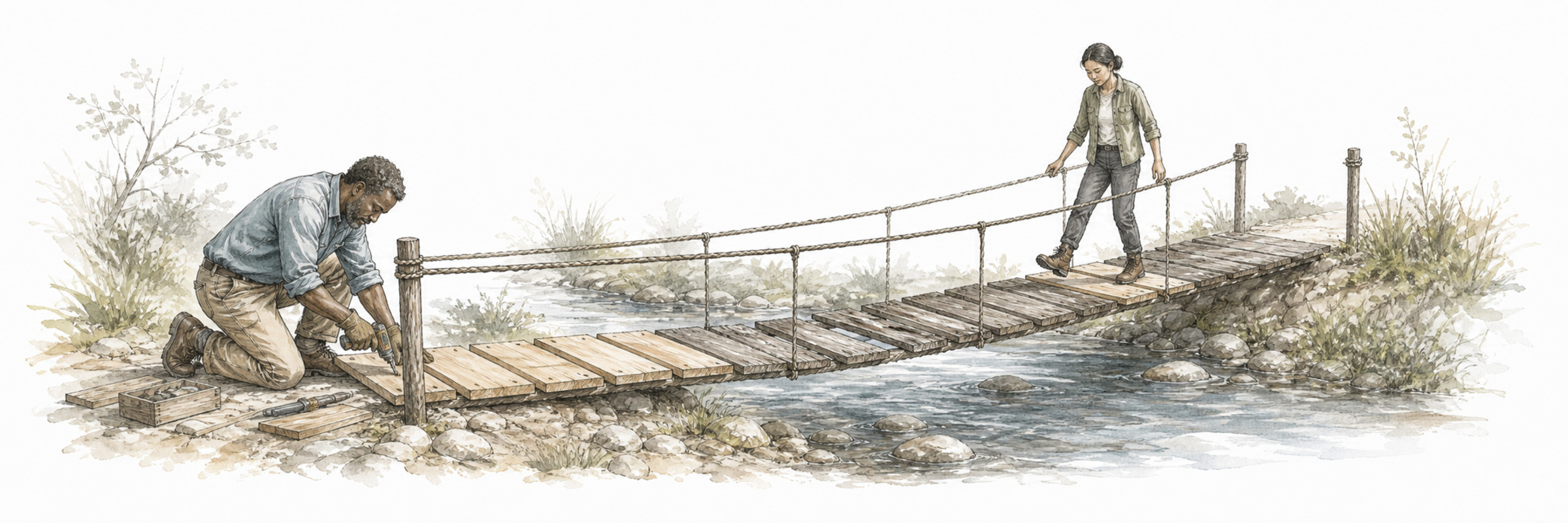
Philosopher John Stuart Mill defended a person’s authority over their own life. That principle matters when a relationship keeps asking someone to surrender their judgment or safety. Some relationships do become so harmful that stepping away is the healthiest choice. Even so, it helps to move carefully and honestly before reaching that point. Some people really do not understand the effect they are having. Clear communication can sometimes wake them up. If intimidation, coercion, or abuse is present, safety matters more than another long conversation [72,149].
Toxic Is a Pattern, Not One Bad Week
Toxic relationships are relationships marked by repeated harm, not simply tension, disappointment, or a rough season [72,149]. The damage usually shows up through recurring patterns of manipulation, abuse, control, neglect, or chronic disrespect [72,149]. One useful way to picture the difference is this. A hard relationship can feel like a storm. A toxic one feels more like breathing smoke every day. A storm can pass. Smoke keeps getting into your lungs.
Here are some patterns that point to a truly toxic relationship:
- Abuse: physical, emotional, sexual, or psychological abuse always matters.
- Manipulation: guilt, shame, blame-shifting, and emotional blackmail are forms of control.
- Neglect: one person’s needs are repeatedly ignored or treated as unimportant.
- One-sided effort: one person keeps carrying the relationship while the other coasts or exploits that effort.
- Constant criticism: honest feedback can help a relationship grow, but contempt and constant tearing-down slowly poison it.
Hard Is Not Always Toxic
Some relationships look toxic from the outside when they are actually strained, immature, or badly handled rather than fundamentally abusive. That distinction matters because the response may be different.
High-conflict couples may clash because of poor communication, stress, or very different temperaments. People with strong personalities may argue often and still care deeply about each other. Growth can create friction too. One partner changes, and the other feels unsettled or left behind. Mental health struggles can also make a relationship feel chaotic without making it automatically toxic.
The question is not whether a relationship has pain in it. The question is what the pain is doing. Is it leading both people toward honesty, repair, and growth, or is it trapping one or both people in the same harmful pattern?
Avoiding the Victim-Villain Trap
One mistake people make is reducing every bad relationship to a cartoon. One person becomes the pure victim. The other becomes the pure villain. Sometimes one person really is carrying most of the harm, especially in coercive control or abuse. When abuse is present, responsibility for that abuse belongs to the abuser [72,149]. That part should not be blurred.
Outside of those clearer abuse cases, many unhealthy relationships work more like spirals than like cartoons. Two people get caught in a loop. One may be contributing far more damage than the other, but both may still be feeding the cycle in some way.
Attachment patterns help explain this. One partner may have an anxious moment and pursue too hard. The other may have an avoidant moment and pull away too fast [285,298]. Then the first person pursues harder because they feel distance. The second person withdraws more because they feel pressure. At that point, both people are helping to build the spiral, even if they are not helping equally.
One useful way to think about it is with simple math:
- Relationship spiral = trigger + interpretation + reaction + counterreaction
- Total damage = Person A’s contribution + Person B’s contribution + the feedback loop between them
The percentages are not always equal. Sometimes it is 50 and 50. Sometimes it is 80 and 20. Sometimes it is 95 and 5. But even a 5 percent contribution still matters if the person refuses to see it.
If someone cannot say, “I can see the small part I played in that spiral,” that refusal gives you useful data. It tells you something about self-awareness, humility, and relational maturity. An adult relationship requires the ability to own your side, even when your side is smaller.
When Small Contributions Still Matter
Owning a small contribution does not mean taking blame for someone else’s abuse, betrayal, or cruelty. It means asking harder and more useful questions.
- Did I ignore clear warning signs because I wanted the fantasy more than the truth?
- Did I keep overexplaining after the other person’s pattern was already obvious?
- Did I respond to distance with panic, control, or emotional flooding?
- Did I keep rewarding mixed signals because I was afraid to lose the connection?
Those questions are not about shame. They are about leverage. You cannot change another person’s character, but you can learn from the part that was yours.
An analogy may help. If two people are carrying a table and one person is carrying almost all the weight, the load is still uneven. But if the second person keeps shifting badly, dropping their corner, or refusing to adjust their grip, they are still part of why the table keeps slamming into the walls.
Power Games Only Make Both People Lose
Power games are another place where people end up playing themselves. They may feel clever for a moment, but the relationship pays the bill later.
One person waits hours to text back, not because they are busy, but because they want to feel in control. The other person senses the game and stops being emotionally open. Now both people are less honest than they were before.
One person flirts with somebody else to provoke jealousy and “test” how much they matter. The other person responds by withdrawing, retaliating, or looking elsewhere for safety. Now both people trust each other less.
One person uses the silent treatment to gain leverage. The other starts overexplaining, begging, or hardening emotionally. Now the bond is no longer a place of safety. It becomes a place of calculation.
One person keeps threatening to leave so they can win the argument. Eventually the other person stops feeling secure enough to build anything real. Even if the bluff works in the moment, the relationship gets weaker every time.
Power games are so self-defeating for that reason. In a close relationship, trying to “win” through manipulation usually means training the other person not to trust you. You may win the move and lose the bond.
When Change Is Possible
Many relationships can improve when both people are willing to tell the truth, listen, and take responsibility. A difficult conversation can open the door to change. So can therapy, new communication habits, and more humility.
Before deciding that a relationship is beyond repair, it can help to look for a few signs:
- Does the other person listen when the problem is named?
- Do they show remorse, or only defensiveness?
- Do they change their behavior, or only apologize for it?
- Do you feel safer and clearer over time, or more confused and worn down?
If the pattern improves, there may be something real to rebuild. If the pattern continues after repeated clarity, that ongoing behavior is useful data.
Time matters here. Repair rarely happens in one conversation. It usually takes repeated honesty, consistent action, and patience. But patience should not become an excuse for staying in a relationship that keeps grinding down your mental health.
Perfection Is the Wrong Goal
Working on an existing relationship is often wiser than chasing an imaginary perfect person. No one is flawless. Every close bond will eventually reveal differences, blind spots, and painful moments.
The real question is whether two people can face those moments with respect and effort. A relationship does not need perfection to become strong. It needs honesty, accountability, and enough goodwill to keep repairing what breaks.
Searching for perfection often turns into a revolving door. One disappointment leads to another search. Then another. Eventually the standard becomes so unrealistic that no real human being can satisfy it.
Rebuilding Trust After Betrayal
Trust is one of the central supports of a healthy relationship, and betrayal can shake that support badly [53,174,365]. Rebuilding trust is possible in some situations, but it is slow work. It cannot be forced by pressure, charm, or a few dramatic promises.
The person who broke trust has to do more than say sorry. They need to:
- name what they did without hiding behind excuses
- take responsibility for the harm
- accept that trust may return slowly
- stay consistent over time
- become more transparent where transparency is needed
- seek help if their pattern is bigger than one moment
The other person also has a role, but it is not to ignore their own instincts. The decision to trust again belongs to the person who was hurt. Forgiveness and reconciliation are not the same thing. Someone can forgive and still decide they no longer want access given back.
Boundaries, Rules, and Useful Data
Boundaries are personal limits. They describe what you will allow, what you will not participate in, and what you will do if harm continues [163]. Rules try to control another person. Agreements are shared understandings that both people discuss and choose together.
That difference matters. A healthy boundary sounds like, “If lying continues, I will step back.” A controlling rule sounds like, “You are not allowed to have your own judgment.”
If you name a boundary and the other person mocks it, pressures it, or keeps testing it, that behavior is useful data. It tells you something about their respect, self-control, and willingness to protect the relationship.
Hard, Harmful, and the Difference
Some relationships are hard. Some are harmful. Wisdom is learning the difference.
Not every conflict means a relationship is toxic. Some people need clearer language, better skills, or more time. Others show a repeated pattern of manipulation, abuse, or contempt that no amount of patience will fix unless they choose deep change for themselves.
You do not need to hate someone to admit they are hurting you. You do not need to call every flawed relationship toxic either. The point is to see clearly. Try honesty first where honesty is safe. Look for accountability instead of polished words. Watch for patterns, not isolated promises.
And if a relationship keeps damaging your mind, your peace, or your dignity, it is not selfish to step away. Sometimes letting go is not a failure of love. Sometimes it is an act of sanity, self-respect, and survival.