Chapter Sixteen: Fearful Attachment, Healing Toward a Secure Future

“The greatest thing in the world is to know how to belong to oneself.”
Michel de Montaigne
French essayist Michel de Montaigne wrote about the value of belonging to oneself. Attachment works like an emotional map. It shapes what feels safe, what feels risky, and how quickly we expect closeness to turn into pain. Fearful attachment, also called disorganized or fearful-avoidant attachment, is one of the hardest maps to live with because it pulls in two directions at once: a real longing for connection and a real fear of what connection might cost. This chapter looks at where fearful attachment comes from, how it shows up in adult relationships, and what helps people move toward secure attachment.
Understanding Fearful Attachment
Fearful attachment is a pattern in which a person wants intimacy but struggles to trust it [320,321]. John Bowlby and Mary Ainsworth helped show that early relationships with caregivers shape later bonding patterns, and Mikulincer and Shaver describe how those patterns can continue into adult life [285,321]. When care has been inconsistent, frightening, or deeply confusing, closeness can start to feel like both relief and danger.
Fearful attachment is one part of the person reaching for warmth while another part is already bracing for impact. That split can lead to mixed signals, strong reassurance-seeking, sudden withdrawal, jealousy, or a push-pull pattern that confuses both partners [285,322].
Childhood Causes of Fearful Attachment
Fearful attachment often begins in childhood. Kids learn what love means from the people who care for them. When those early relationships are unstable, unsafe, or deeply inconsistent, the child may learn that the very person they need is also the person they must watch carefully.
Inconsistent Caregiving
Inconsistent or unpredictable caregiving is one of the clearest paths into fearful attachment [320]. If a child’s needs are met warmly one day and ignored or punished the next, the child can stop feeling sure about what closeness will bring. That kind of instability teaches the nervous system to stay alert even inside relationships that are supposed to feel safe.
Trauma and Abuse
Trauma and abuse can create the same conflict in an even sharper way [321]. When the caregiver is also the source of fear, the child may still long for comfort while also learning that comfort can turn into harm without warning. Any nervous system would carry that lesson forward.
Parental Neglect
Emotional or physical neglect can also shape fearful attachment [322]. When comfort, food, protection, or attention are unreliable, a child may begin to believe that their needs are too much, inconvenient, or unworthy of response. Later in life, that belief can make closeness feel both deeply wanted and deeply unsafe.
Parental Instability
Caregivers who are overwhelmed by mental illness, addiction, untreated trauma, or chaos of their own may be too inconsistent to provide stable emotional ground [285]. The child is left reading the room all the time, trying to predict what version of the caregiver will show up.
Early Separation from Caregivers
Early separation from a primary caregiver through death, divorce, adoption, or abrupt disruption can also leave a deep mark [323]. If that transition is poorly supported, the child may carry forward a lasting fear that connection can vanish suddenly.
Household Chaos
Household chaos matters too [324]. Frequent moves, constant conflict, unstable adult relationships, or a general lack of predictability can make home feel like shifting ground. Children do better when home feels steady enough to rest in, not like a place where they always have to be ready.
Fearful attachment in childhood usually grows out of repeated uncertainty, not a single bad day. Even so, early shaping is not the same as permanent destiny. People can understand these patterns, heal them, and build something steadier over time.
Fearful Attachment in Adulthood
In adulthood, fearful attachment often shows up as a difficult mix of longing and fear. Someone may want closeness badly, then pull away when it starts to feel real. They may ask for reassurance, doubt it when it comes, become jealous, expect abandonment, or shut down when vulnerability feels too exposed [285,320]. Past betrayal and unresolved pain can intensify all of that.
Adult Causes of Fearful Attachment
Although childhood matters, adult experiences can reinforce fearful attachment or even bring it to the surface in someone who seemed more secure before. Painful adult relationships can teach the same lesson all over again: love is wanted, but love is dangerous.
Traumatic Life Events
Traumatic life events can shake a person’s sense of safety in a lasting way [324]. Violence, major illness, disaster, or devastating loss can leave the body expecting danger even after the event is over. That expectation can spill into intimate relationships.
Abusive Relationships
Abusive relationships can reinforce fearful attachment powerfully [321]. When closeness becomes linked with humiliation, fear, coercion, or harm, the nervous system may keep expecting future closeness to go the same way.
Betrayal and Broken Trust
Betrayal by a partner, close friend, or family member can also reshape attachment [319]. Trust breaks are not always loud. Sometimes they teach a quieter lesson that is just as damaging: do not relax, because people can turn on you.
Rejection and Abandonment
Rejection and abandonment can deepen the same fear [320]. After being left, some people start reaching for closeness while also keeping one foot near the door. They want love, but they do not want to be caught unprepared again.
Reoccurring Patterns of Unstable Relationships
Repeated unstable relationships can train the mind the same way [285]. If love keeps coming with extreme highs, extreme lows, and no predictability in between, the body may start treating intimacy itself like a setup for pain.
Neglect and Disregard
Neglect and disregard matter in adult relationships too [322]. When someone’s emotional needs are repeatedly ignored, mocked, or dismissed, vulnerability can start to feel like a mistake.
Naming these adult causes matters because people often blame themselves for reactions that were learned under pressure. The pattern may be old, but it is not fixed. Understanding what shaped it is part of loosening its hold.
Moving Toward Secure Attachment
Change usually begins with self-awareness. A person has to notice the pattern before they can interrupt it: the fear, the retreat, the reassurance-seeking, the testing, the shutting down. Therapy can help make those patterns easier to understand and change. Emotionally Focused Therapy, described by Sue Johnson, has been especially helpful for attachment wounds because it helps people understand their emotional reactions and build safer ways of connecting [325].
Self-compassion matters too. People with fearful attachment often speak to themselves harshly, especially after conflict or rejection. Learning to respond with honesty and kindness instead of shame helps loosen the belief that love must always be earned through anxiety.
Open communication matters as well. Secure attachment grows when people can say what they feel, what they fear, and what they need without treating vulnerability like a trap. Healthy communication does not mean all relationships can be repaired. It means healthier bonds are more possible when honesty, consistency, and care start replacing panic and guessing.
The Past Explains, It Does Not Decide
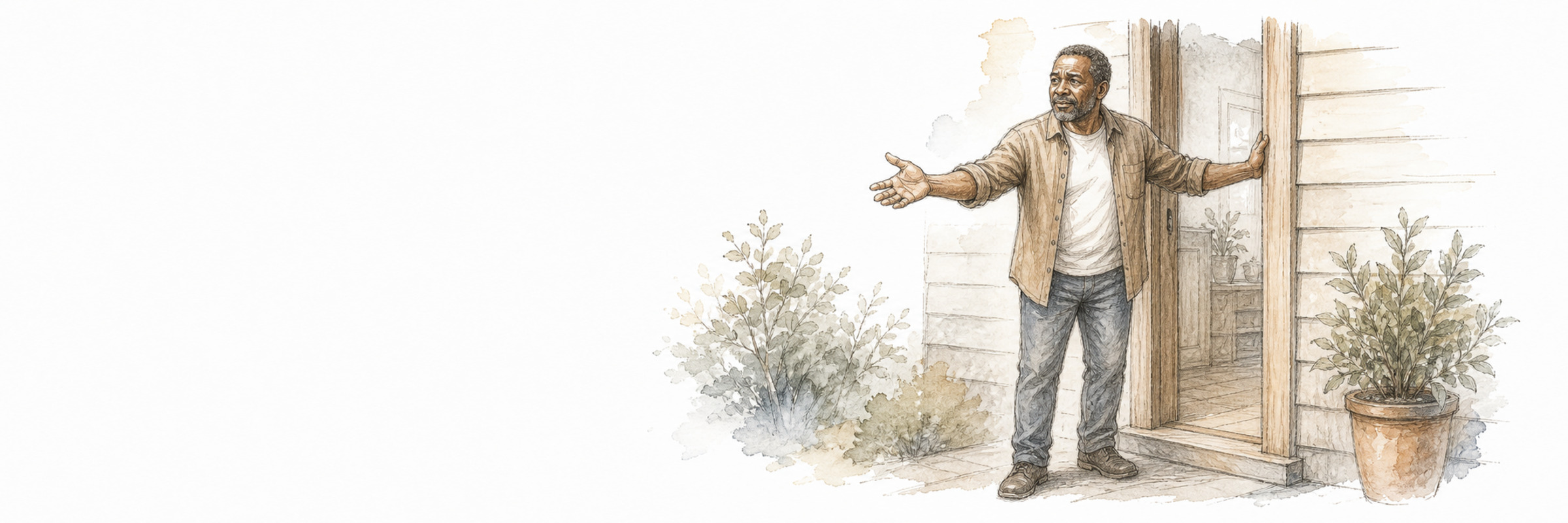
Fearful attachment can make love feel like standing in a doorway with one hand reaching forward and the other trying to hold the door shut. That conflict is exhausting, but it is also understandable when a person’s history taught them that closeness and danger can live side by side.
Understanding attachment is not about blaming ourselves or the people who came before us. It is about seeing the pattern clearly enough to change it. With support, honesty, and repeated experiences of safer connection, people can move toward relationships that feel steadier, kinder, and less ruled by fear.
Your past may explain the pattern. It does not get the final word on your future.