Chapter Three: Drawbacks of Relying Solely on Dating Apps for Finding Partners, Get Your Life Together
“Online dating is just as murky and full of lemons as finding a used car in the classifieds. Once you learn the lingo, it’s easier to spot the models with high mileage and no warranty.”
Laurie Perry
Author Laurie Perry’s used-car comparison is funny because there is truth in it. Dating apps can be useful. They widen the pool. They make introductions easier. They can help people meet who might never cross paths otherwise. The trouble starts when apps become the only plan. If a person relies on them too heavily, dating can become more about sorting profiles than building real connection.
Understanding Dating App Culture
Dating apps run on algorithms. An algorithm is just a set of rules a platform uses to sort information and make predictions. On dating apps, those rules help decide which profiles you see, which profiles see you, and what the platform thinks you are likely to engage with.
Research suggests these systems can track patterns in attraction and behavior more closely than many users realize [429]. The predictive power of an app does not mean it knows your soul. It does mean the platform is built to study habits, reward repeated use, and keep you interacting. If a person forgets that, they can start mistaking the app’s design for organic romantic fate.
Limited Face-to-Face Interactions
One major weakness of relying only on apps is that real-life social skill still matters. Texting, swiping, and profile browsing do not fully train a person to read body language, tolerate awkward pauses, or hold steady eye contact in a difficult conversation [430].
Those skills matter because relationships eventually have to live in the real world. A screen can help start a conversation. It cannot fully replace the information people get from tone, timing, presence, and shared physical space.
Overdependence and Desperation
Dating apps can also feed the illusion of endless options. That illusion can create two opposite problems at once. Some people grow desperate and start lowering standards because they feel pressure to find someone quickly. Others keep scanning for the next better option and never settle into real commitment [431].
It works a bit like standing in a grocery aisle comparing twenty versions of the same thing until you no longer trust yourself to choose. Too many options can make people impulsive, restless, and chronically unsatisfied.
Superficial Connections
Most dating apps lean hard on appearance. The heavy emphasis on appearance is part of the design. People often decide in seconds whether a profile deserves more attention. Research on self-presentation and motives on Tinder helps show how easily attraction can become flattened into image management [432].
Physical attraction matters. It is just not enough by itself. If dating becomes mostly a contest of images, deeper qualities like emotional steadiness, values, integrity, and long-term compatibility are easier to miss.
Safety Concerns and Deception
Safety is another serious concern. Dating apps can expose people to scams, predatory behavior, false identities, and catfishing [433,434]. Even when platforms add verification tools, those systems are not perfect.
The possibility of deception is one reason in-person meetings still matter. Meeting in public places, telling someone where you are going, and moving carefully are not paranoid habits. They are sensible precautions. The app may create the introduction. It does not guarantee the person’s honesty.
Why Sole Reliance Becomes a Problem
The bigger issue is not that dating apps exist. The bigger issue is what happens when a person stops building a life outside them. If all romantic possibility lives on a screen, a person can slowly lose practice in ordinary social courage. They may stop going places, stop growing, and stop becoming the kind of person who can meet others with depth in the real world.
The need for a life outside the app is why the subtitle of this chapter still matters. Get your life together. Build a life worth inviting someone into. Friends, purpose, health, social confidence, and real-world community all make dating healthier, whether an app is involved or not.
Compatibility Is More Than Matching
One reason apps are limited is that compatibility is deeper than attraction, convenience, or shared hobbies. John Gottman’s work describes compatibility more as the ability to live well together, maintain friendship, and stay emotionally available to each other over time [293]. Gary Lewandowski makes a similar point: healthy relationships depend on more than chemistry. They also depend on values, communication, mutual effort, and the willingness to grow [294].
Attachment styles start to matter here. Two people can look compatible on paper and still trigger each other constantly once closeness becomes real. A secure person may want honesty, steadiness, and emotional openness. An anxious person may crave reassurance but still fear abandonment. An avoidant person may like connection until it starts to feel too close. A fearful-attached person may want love deeply while also bracing for pain [285,298,300,320].
The influence of attachment on compatibility does not mean people with insecure attachment are doomed. It does mean attachment patterns affect compatibility in the real world. No app can fully see that from photos, short prompts, and swipe behavior.
Psychological Testing Can Help, But It Is Not Destiny
More thoughtful psychological testing or structured self-assessment can be useful here. Used well, these tools can give people better insight into what they are likely to find easy in relationships and what they are likely to find hard. Attachment assessments, personality measures, values inventories, and guided compatibility conversations can all help surface patterns that ordinary attraction might hide [283,293,294].
The point is not to turn dating into a laboratory. The point is to get better data. If someone consistently tests high for anxious attachment, for example, they may need to know that reassurance, conflict, ambiguity, and inconsistency are likely to hit them harder than they hit someone else. If someone trends avoidant, they may need to admit that emotional closeness, dependence, or heavy relationship demands may trigger withdrawal [285,300,320].
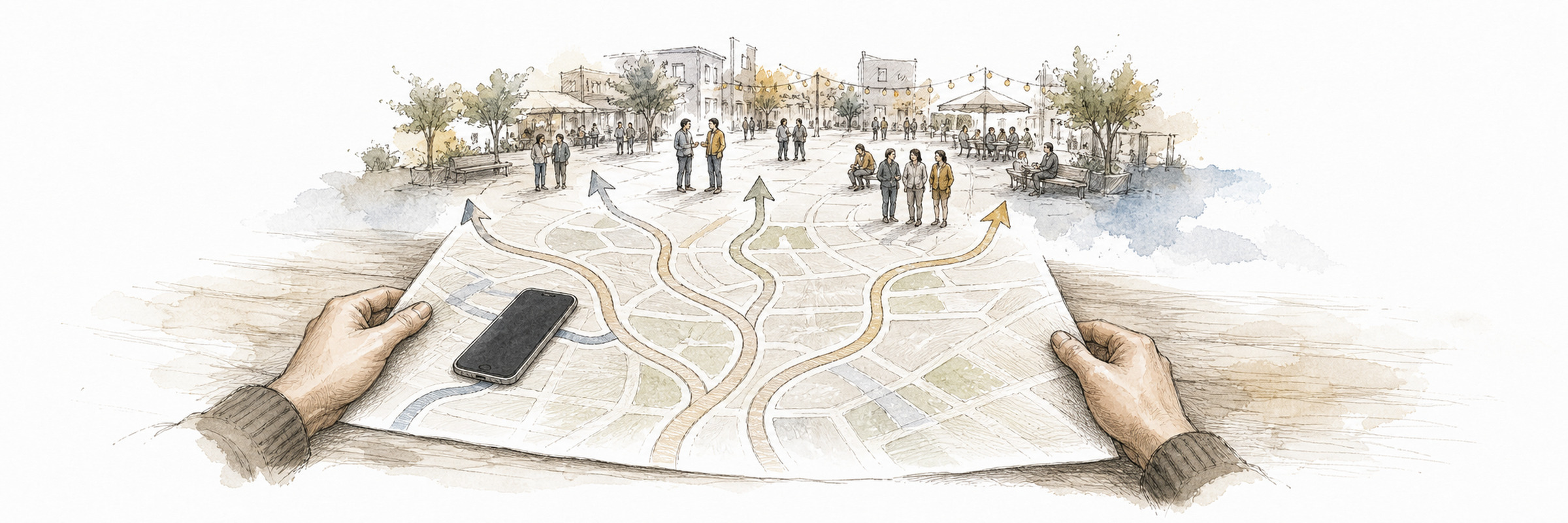
These tools should be treated like maps, not verdicts. A map can help you avoid getting lost. It does not walk the road for you. Testing can highlight likely friction points, but it cannot replace judgment, observation, and time.
Attachment Styles Are Not Fixed
One of the most important things to understand is that attachment styles are not permanent identities. They are patterns. Patterns can change. They can improve, and they can also get worse under enough strain [283,285].
A person may seem fairly secure for years and then get knocked off balance by betrayal, chronic stress, emotional neglect, infidelity, abuse, repeated invalidation, or a relationship that keeps reopening old wounds [319,324]. The way attachment can be shaken under stress is part of why compatibility is not only about who a person is on their best day. It is also about how both people respond when life gets hard.
Secure attachment is easier to keep when there is honesty, consistency, emotional safety, and repair after conflict. Security is harder to maintain when love becomes unpredictable, punishing, manipulative, or emotionally chaotic [285,300].
Moving Back Toward Secure Attachment
Getting back to secure attachment usually takes real work. A partner can support that work, but they cannot do it for the other person. The person with the insecure pattern has to face it, name it, and practice something different.
That often includes:
- self-awareness about triggers and recurring relationship behavior
- therapy that actually addresses attachment wounds, such as Emotionally Focused Therapy [325]
- better emotional regulation
- more honest communication
- learning to tolerate closeness without panicking and distance without catastrophizing
- choosing relationships where consistency is possible instead of chasing familiar chaos
Levine and Heller’s work, along with broader attachment research, points in the same direction: people move toward secure attachment through repeated experiences of safer connection, clearer communication, and better self-understanding [283,285,298].
For dating, that matters a lot. It means a person should not only ask, “Do I like this person?” They should also ask, “What does this relationship bring out in me? Does it move me toward honesty, steadiness, and growth, or does it keep activating the same old fear?”
Keep the App in Its Place
Dating apps can be useful tools. They should stay tools. If they become the whole strategy, the cost can include weaker social skill, more superficial choice-making, false abundance, and greater exposure to deception.
Real connection usually needs more than matching. It needs presence, judgment, shared experience, and the kind of character that shows up best away from a screen. It also needs a better read on compatibility than most apps can provide. Attachment style, emotional availability, values, communication, and the willingness to work on insecurity all matter. Use the app if it helps. Just do not let the app become your whole romantic world.