Chapter Three: Ego Unraveled, Exploring the True Nature of Self in Psychology

“The ego is not master in its own house.”
Sigmund Freud
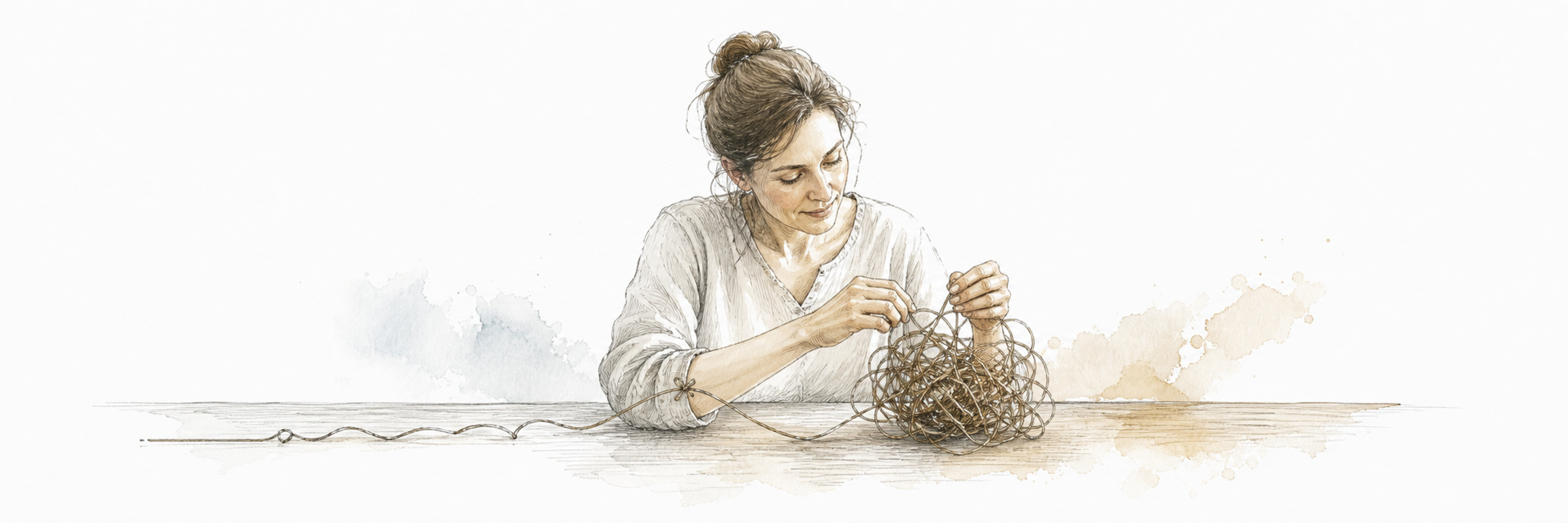
The ego may be one of the most misunderstood words in popular psychology. In everyday speech, it usually means arrogance. In psychology, especially in Austrian physician and psychoanalyst Sigmund Freud’s work, it means something much more basic and much more important: the part of us that tries to negotiate between desire, conscience, and reality [571]. You can think of it as the part trying to keep your inner life and outer life from crashing into each other. When that part is healthy, it supports resilience, self-awareness, and real confidence. When it is weak or distorted, it can feed defensiveness, fragility, and the kind of self-centeredness that pushes people away.
Freud, Erikson, Jung, Maslow, and Rogers each help us see a different side of that picture. Their work gives us a strong starting point for understanding what the ego is, what it is not, and how to keep it from running our lives badly.
Understanding the Ego
In The Ego and the Id, Freud describes the ego as the mediator between the instinct-driven id and the morally demanding superego [571]. The id wants what it wants. The superego tells us what we should be. The ego has to live in the middle and deal with the real world at the same time.
That mediating role is why the ego amounts to more than arrogance: it is the part of us trying to make workable decisions under pressure. A person can be loud and boastful and still have a weak ego. A person can be quiet and steady and have a strong one.
Useful Ways to Picture the Ego
If Freud’s language feels abstract, a few analogies can help. You do not need ten of them. You just need one or two that make the idea easier to see.
- An orchestra conductor: The ego helps keep different inner forces in time with one another. Desire, fear, memory, conscience, and ambition may all be playing at once. The ego does not silence them. It helps them work together.
- An athlete balancing offense and defense: The ego helps us go after what matters while still respecting limits, consequences, and other people. A healthy ego knows when to push and when to hold back.
- The trunk of a tree: The ego can also be pictured as the trunk connecting deep roots and high branches. Our instincts pull from below. Our values reach upward. The ego helps hold the whole structure together.
No analogy captures the whole truth. Still, a good analogy can make a difficult idea feel less slippery. Clearer mental pictures matter, because the ego is easier to work on once we can actually picture what it does.
The Ego: Hero or Villain?
Popular culture often treats the ego like the villain in the room. When people say someone has a “big ego,” they usually mean the person is arrogant, attention-hungry, or insufferable. Those traits can grow out of ego problems, but they are not the same thing as the ego itself.
The more useful question is not whether a person has an ego. Everyone does. The real question is whether that ego is balanced.
John and Jane: Healthy and Unhealthy Ego
Imagine two people, John and Jane. Jane constantly seeks validation. She boasts, belittles, and needs to feel bigger than everyone around her. John is steadier. He knows his worth, speaks honestly, and does not need to humiliate other people to feel solid.
From the outside, Jane may look more powerful. John may look quieter and less imposing. But psychologically, John is the stronger one. Jane’s need for constant validation points to an unstable ego. John’s humility, self-possession, and empathy point to a healthier one.
A healthy ego has no need to dominate the room or fish for applause every five minutes. It gives a person enough inner steadiness to live honestly without diminishing everyone else.
Ego Development: A Lifelong Process
The ego develops over time. Erik Erikson made this point clearly in his theory of psychosocial development, where ego growth remains central from infancy through old age [572].
This slow growth matters because many people treat maturity as if it should arrive all at once. It rarely does. Healthy ego development is more like gradual strengthening than a switch being flipped. Life keeps testing us, and each stage asks for a little more honesty, flexibility, and responsibility.
Common Misconceptions About the Ego
One of the biggest misunderstandings is the idea that ego simply means arrogance. That confusion comes from everyday language, not psychology. In psychological terms, the ego helps mediate between desire, moral judgment, and outside reality [571]. It supports self-awareness, identity, and decision-making.
When the ego is balanced, a person can move through life with confidence and humility at the same time. When it is imbalanced, that same person may become boastful, self-protective, self-deceiving, or emotionally brittle. So the work is less about destroying the ego and more about bringing it into better order.
Ego Death and Psychedelics
People who use psychedelics such as LSD, DMT, or psilocybin sometimes describe an experience called “ego death.” What they usually mean is a temporary loosening of the ordinary sense of self, often accompanied by feelings of unity, awe, or deep disorientation.
It helps to think of ego death less as the destruction of the self and more as the volume of the usual self-story being turned way down for a while. That shift can produce insight, but it can also produce confusion. Some people come away with a broader view of themselves. Others come away overwhelmed.
Because of that, these experiences should be approached with caution, and ideally with professional guidance. A powerful moment is not the same thing as a finished transformation. Insight still has to be integrated into ordinary life if it is going to do any real good.
The Evolutionary Purpose of the Ego
From an evolutionary standpoint, the ego likely helps us survive in both practical and social ways. It helps us protect our interests, interpret our experience, assert ourselves, and form bonds with others. It also helps us maintain a coherent sense of identity across changing situations.
That role is bigger than self-protection alone. The ego also supports reflection, learning, and adaptation. Without some stable sense of self, growth becomes much harder because there is no real center from which to examine, correct, or strengthen our lives.
The Importance of Self-Reflection
Self-reflection is one of the best tools we have for keeping the ego honest. Maslow’s work on human motivation and self-actualization helped establish the importance of this kind of inward honesty [573]. When we pause long enough to examine our thoughts, reactions, and motives, we begin to see what is shaping us.
Self-reflection works a little like holding up a mirror to your inner life. It lets you see patterns that are easy to miss when you are moving too fast. That mirror may reveal pride, fear, insecurity, hunger for approval, or wounds you have been dressing up as certainty. It may also reveal strengths you have been underestimating.
What Reflection Reveals
When people talk about ego problems, they often focus on pride. But an unhealthy ego can also show up as chronic self-doubt, passive dependence, emotional denial, or a shaky sense of identity. Reflection helps us ask better questions. Why do I react so strongly here? Why do I need approval so badly in this situation? What story am I telling myself that may not be true?
Questions like that can uncover patterns that have been running our lives for years.
From Insight to Action
Seeing the pattern is only the first step. Then comes the harder part. You have to act on what you saw. If reflection shows a pattern of self-sabotage, the next step may be learning steadier habits. If it reveals a deep hunger for approval, the work may involve self-compassion, boundaries, and a less performative way of living.
Growth rarely comes from insight alone. It comes from insight followed by repeated action.
A Lifelong Practice
Self-reflection earns its value as an ongoing practice, never a one-time fix. We keep learning because life keeps exposing us. Ongoing self-discovery can be humbling, but it is also good news. It means we are not locked into the worst version of ourselves.
Practicing Empathy and Compassion
Carl Rogers placed empathy near the center of healthy human relating [574]. He understood that people change more safely and more honestly when they are seen clearly and treated with real regard. That insight matters here, because empathy and compassion keep the ego from hardening into self-absorption.
The Pull of Temporary Pleasure
When people feel empty, they often reach for quick relief. A purchase, a night out, attention online, a brief rush of praise. None of these things are always wrong. But when they become substitutes for real connection, they stop feeding us well. They become emotional junk food. They give a burst, then leave us hungry again.
Why Empathy Matters
An unchecked ego can make the world feel small. Everything starts bending around our own wants, wounds, and fears. Empathy widens that world again. It reminds us that other people are not props in our private story. They are living souls with pain, dignity, and inner lives as real as our own.
Compassion Turns Insight into Action
Empathy helps us understand another person’s pain. Compassion moves us to care about it in a useful way. Together, they keep the ego from becoming the center of everything. They also make relationships deeper, steadier, and more humane.
Empathy and compassion, far from being soft extras, are part of what keeps a person’s strength from turning cold.
Embracing Humility
Humility can sound weak in a culture that worships display. It is not weak. Maslow connected maturity with honesty, reality-based living, and self-actualization [575]. Humility belongs in that picture.
Humility is not self-erasure. It is accurate self-seeing. It means you can admit what is true about your strengths without pretending you have no limits.
Humility and Confidence Can Coexist
Healthy humility does not say, “I am nothing.” It says, “I know what I do well, and I know I still have more to learn.” That balance matters. Without confidence, humility collapses into self-dismissal. Without humility, confidence curdles into vanity.
Other People as Mirrors
Other people often show us things we would not see on our own. A mentor, a friend, a critic, or even a rival can reveal something about us. If we stay open, their feedback can become a mirror rather than a threat. That kind of openness protects us from the illusion that we are already finished.
Humility as Practice
Humility stays a practice rather than a destination. It shows up in how we handle correction, success, failure, and uncertainty. It keeps us teachable. It also makes us safer to be around.
Mindfulness of the Ego
Jung emphasized the importance of understanding the ego’s functions while also remaining alert to its distortions [576]. Mindfulness helps with that. It lets us watch the ego in motion rather than only noticing the damage after it is done.
What Mindfulness Helps You Notice
The ego helps us decide, assert ourselves, and maintain a sense of identity. But it can also pull us toward self-deception, defensiveness, or exaggerated self-importance. Mindfulness helps us notice when that shift is happening.
It can work a little like checking the dashboard lights in a car. If pride, shame, contempt, or hunger for praise starts flashing, mindfulness gives you a better chance to notice before the engine overheats.
Practices That Help
Mindful reflection can take several forms. Meditation can help. Journaling can help. Open, honest conversations with trusted people can help. The point is not to become self-obsessed. The point is to become aware enough to make wiser choices.
A Lifelong Commitment
Maintaining a balanced ego is ongoing work. There is no permanent finish line where you become immune to distortion. But mindfulness helps you catch yourself sooner, repair more honestly, and return more quickly to what is true.
A Truer Self
A healthy ego does not make a person grand. It makes them grounded. It helps them live with steadiness, humility, empathy, and enough self-respect to face life honestly.
The theorists in this chapter each held up a different corner of the same picture: an ego that mediates under pressure [571], keeps developing across a lifetime [572], grows through self-awareness and humility [573,575], stays warm through empathy [574], and holds together best when it is watched rather than obeyed [576].
If you want to cultivate a healthier ego, the work is simple to name, even if it is not always simple to do. Reflect honestly. Practice empathy. Choose humility. Stay mindful of what is driving you.
That kind of inner work leaves you truer, not smaller. And a truer self is usually stronger, kinder, and much easier for other people to trust.