Chapter One: Helping Your Partner Overcome Combat PTSD, Empathy, Patience & Care

“The struggle you’re in today is developing the strength you need for tomorrow.”
Robert Tew
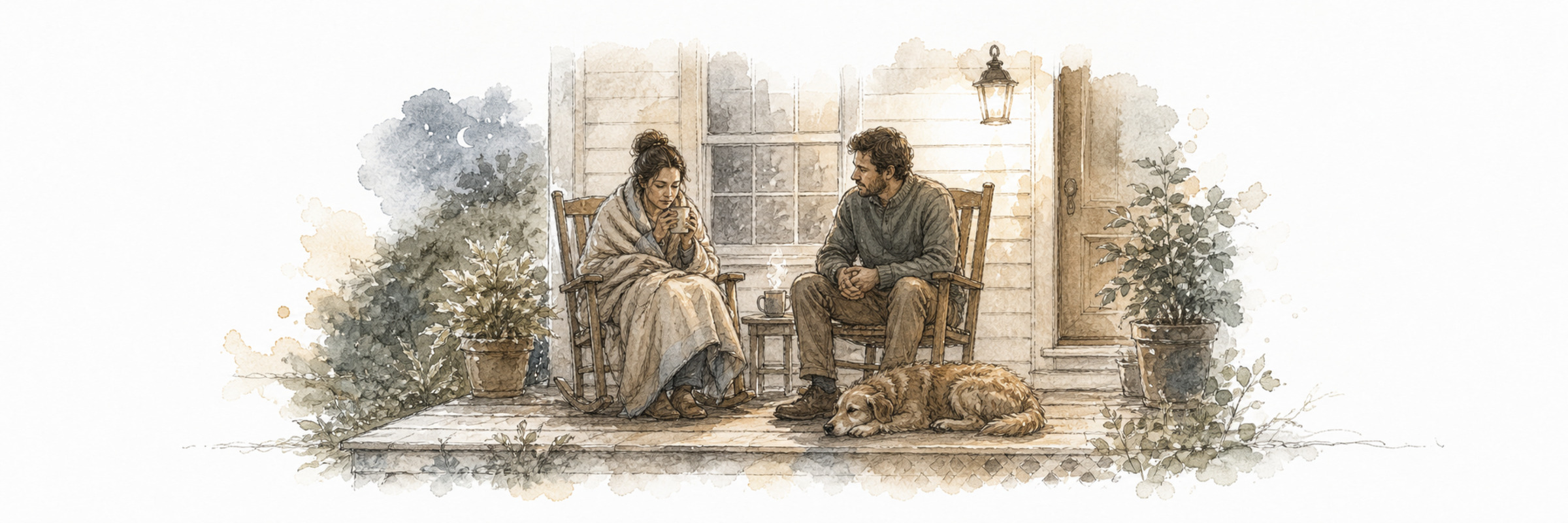
Writer Robert Tew’s line about struggle building strength can be encouraging, but PTSD is not a character-building exercise. It is a real trauma response. Living beside it can wear both people down if you do not understand what you are dealing with.
Combat-related post-traumatic stress disorder, or PTSD, affects not only the person who lived through trauma but often the people who love them. Partners may find themselves trying to offer comfort while also managing triggers, sleep disruption, shutdown, irritability, fear, and exhaustion. This chapter is here to help you support your partner without losing your own footing.
Understanding Combat PTSD
PTSD is a mental health condition that can develop after a person experiences or witnesses trauma, including combat exposure [581]. Common symptoms include nightmares, flashbacks, intrusive memories, avoidance, hypervigilance, irritability, sleep problems, and strong physical stress responses [581,582]. Some people improve a great deal with treatment, and some continue to carry symptoms even after a lot of work [583].
Love alone is not enough. Care helps, but care works best when it is joined to understanding, structure, treatment, and patience. It also helps to remember that many reactions that seem confusing in ordinary life once made sense in dangerous conditions.
How to Support a Partner With Combat PTSD
Learn the Triggers and Warning Signs
Triggers can include loud noises, crowds, certain smells, certain dates, arguments, confined spaces, or situations that resemble past danger [583]. Talk openly about what tends to set your partner off. You do not need to become perfect at preventing every trigger. You do need to become less surprised by them.
When you can spot the warning signs early, you have a better chance of slowing a spiral before it gets worse. Early warning signs may include changes in breathing, tone, posture, sleep, isolation, drinking, or irritability. Think of it like watching weather move in. You cannot control the storm, but you can stop pretending the sky is still clear.
Help Them Return to the Present
Nightmares, flashbacks, and sudden distress can leave a person feeling as if the danger is happening again [582,583]. In those moments, your calm matters. Speak simply. Remind them where they are, what day it is, and that they are with you now. Do not flood them with questions while they are still trying to come back to the present.
Nightmares can remain a major problem even after treatment [583]. Comfort, reassurance, and a consistent nighttime routine can help. So can talking with a clinician about therapy options, medication options, and sleep-focused support [582,583].
Communicate With Patience, Clarity, and Boundaries
Open communication helps, but do not confuse open communication with forced disclosure. Your partner may not want to describe every memory, and they do not have to. What matters is building a relationship where truth is possible, boundaries are respected, and hard moments can be talked about without shame.
Patience matters because recovery is rarely linear [582]. Some days will feel calm. Some will not. Try not to make every bad day mean the whole relationship is failing. At the same time, do not confuse understanding symptoms with accepting mistreatment. PTSD may explain some behavior. It does not excuse intimidation, cruelty, or violence. If there is danger in the home, safety comes first.
Support Treatment and Healthy Routines
Encourage your partner to stay connected to care. Ongoing care may include therapy, medication, support groups, grounding skills, movement, sleep work, or follow-up appointments [582,583]. You do not have to become their therapist. You do have to respect the fact that trauma recovery usually needs more than love and good intentions.
Healthy routines help because they give the nervous system more chances to settle. Regular meals, exercise, time outside, structured sleep, and reduced substance use can all matter [583]. If your partner is open to it, join them in a few of those habits. Shared routines often feel less like treatment and more like life.
Build Support Around Both of You
You should not be the only pillar holding this up. Friends, family, clinicians, peer groups, veteran communities, and family support programs can all help [583]. The wider the support system, the less isolated both of you will feel.
Take Care of Yourself Too
People who love someone with PTSD often push their own needs to the bottom of the list. Pushing your own needs down can work for a little while. Then the resentment, burnout, fear, or numbness starts showing up.
Take your own physical and mental health seriously. Eat, sleep, move, rest, and talk to someone safe. If you need your own therapist, support group, pastor, sponsor, or trusted friend, use them. You are not betraying your partner by keeping yourself well. One exhausted nervous system cannot stabilize another for very long.
Resources
The following resources can help Veterans, partners, and families deal with PTSD and related crises.
Crisis Resources
If you believe there is an immediate crisis for you or your loved one, use one of these confidential resources:
The 988 Suicide & Crisis Lifeline at www.988lifeline.org
This service is available 24 hours a day for anyone in emotional distress. Call or text 988. Live chat is also available through the website.
The Veterans Crisis Line at www.veteranscrisisline.net
This service connects Veterans in emotional distress, along with family and friends, to responders trained to help Veterans. Call 988 and press 1, or text 838255. Live chat is also available through the website.
The National Domestic Violence Hotline at www.thehotline.org
This service offers 24/7 anonymous access to shelters, domestic violence programs, and advocacy. Call 1-800-799-SAFE (1-800-799-7233), text START to 88788, or use live chat through the website.
The National Sexual Assault Hotline at rainn.org/help-and-healing/hotline
Operated by RAINN, this 24/7 resource helps connect survivors to counseling and support. Call 1-800-656-HOPE (1-800-656-4673).
There is also an online chat option through RAINN.
The National Child Abuse Hotline at www.childhelp.org
Contact this 24/7 resource if you suspect child abuse, fear you may hurt a child, or need help after abuse. Call 1-800-4-A-CHILD (1-800-422-4453).
General Resources for Family and Loved Ones
Family members and close friends often neglect their own needs while trying to care for someone with PTSD. Please find support for yourself too.
211 at www.211.org
This referral line connects people with community services such as housing, food support, support groups, and employment help. Dial 211.
The Traumatic Stress Institute at www.traumaticstressinstitute.org
The Sidran Institute is now part of the Traumatic Stress Institute of Klingberg Family Centers. Its website provides trauma-related educational resources.
The National Alliance on Mental Illness (NAMI) at www.nami.org
NAMI offers a Family-to-Family education program for caregivers of people living with serious mental illness. You can also email [email protected] or call the Information Helpline at 1-800-950-NAMI (1-800-950-6264).
Resources for Loved Ones of Veterans and Service Members
Some of the resources above are already veteran-specific. These additional resources may also help:
The VA Caregiver Support Program provides services for family members who are caring for a Veteran: call 1-855-260-3274.
VA’s former Coaching Into Care service has been deactivated. Calls to its former number are redirected to the Caregiver Support Line listed above.
The Vet Center Combat Call Center is a 24/7 call center for combat Veterans and their families who want to talk about military experience or the challenges of readjustment.
The Psychological Health Resource Center offers 24/7 support for service members and their families. Staff can answer questions about mental health symptoms and help you find resources. Call 866-966-1020, email, or use live chat at https://www.health.mil/Military-Health-Topics/Mental-Health/Psychological-Health-Resource-Center.
The National Resource Directory links to over 10,000 services and resources that support recovery, rehabilitation, and reintegration for wounded, ill, and injured Service members, Veterans, their families, and those who support them.
Give an Hour at giveanhour.org/military
This nonprofit offers no-cost mental health care for military communities. Eligibility and provider availability vary, so check the current program details.
Resources for Children with a Parent Who Has PTSD
Children respond to a parent’s PTSD symptoms, even when nobody is talking openly about them. Some children copy the parent’s behavior to feel connected. Some become overly responsible. If children do not get help with their feelings, those feelings can show up at school, in relationships, or through anxiety, fear, and sadness.
MilitaryKidsConnect at www.militarykidsconnect.health.mil
MilitaryKidsConnect is an online community for military children ages 6 to 17, with support before, during, and after a parent or caregiver’s deployment.
Sesame Street for Military Families at www.sesamestreetformilitaryfamilies.org
This site offers resources to help families with deployments, transitions, relocations, injuries, and more.
Children need to hear clearly that a parent’s PTSD symptoms are not their fault. An interactive workbook for teens, Finding My Way: A Teen’s Guide to Living with a Parent Who Has Experienced Trauma, may also help: www.seedsofhopebooks.com/finding-my-way.html
More Help
If your family needs help talking things through, consider family therapy. Family therapy gives each member of the family, including the children, a chance to say what they need. A therapist can help your family communicate better, stay connected, and cope with hard emotions. Your health professional, faith community, or local social service organization may be able to help you find a family therapist with PTSD experience.